Choosing a printing method can make a noticeable difference in how your custom T-shirts look, feel and perform over time. Two popular digital options are direct-to-garment (DTG) and direct-to-film (DTF) printing.
Both can produce detailed, full-colour designs, but they use different processes. The right choice depends on your artwork, fabric, quantity, budget and preferred finish.
Choose DTG when a soft feel on cotton matters most. Choose DTF when you need more flexibility across fabrics and garment colours. For high volumes of one simpler design, compare screen printing as well.
What are DTG and DTF T-shirt printing?
Both are digital garment decoration methods. Neither requires the traditional screen setup used in screen printing, which makes them useful for detailed artwork, multiple colours and smaller runs.
Direct-to-garment printing
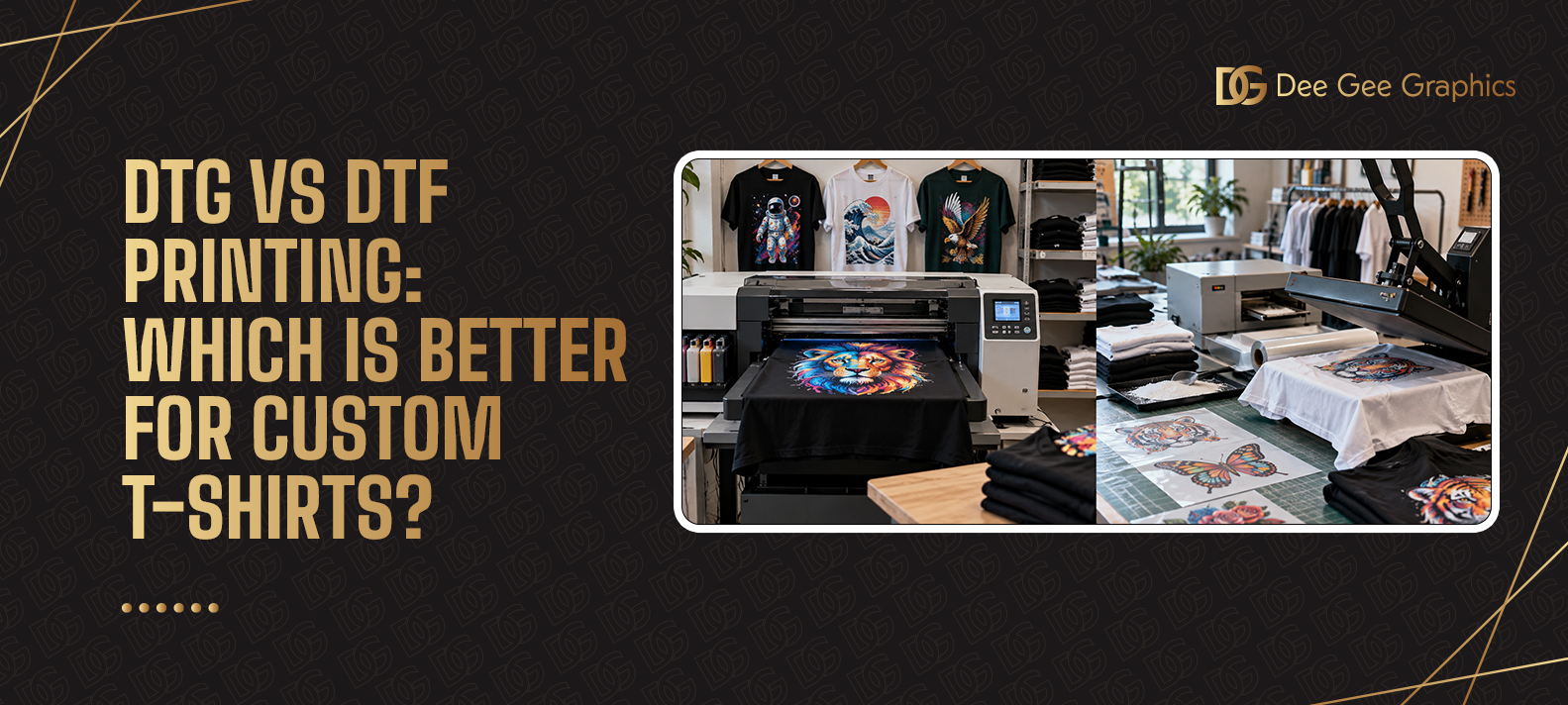
DTG applies water-based ink directly onto a garment. The shirt is placed on a flat printing surface, prepared with the appropriate pretreatment, printed with the digital artwork and then heat-cured to set the ink.
Because the ink becomes part of the fabric instead of forming a separate transfer layer, DTG can feel soft and lightweight. It is particularly well suited to cotton and other natural-fibre garments.
Direct-to-film printing
DTF prints the artwork onto specialised transfer film first. Adhesive powder is applied and cured, then heat and pressure transfer the design onto the garment.
This approach works across a broader range of fabrics, including cotton, polyester, fleece, nylon and blends.
Artwork → pretreatment → ink printed on garment → curing
Artwork → film print → adhesive → curing → heat transfer
DTG vs DTF: key differences
There is no universal winner. Each method has characteristics that suit different projects.
| Factor | DTG | DTF |
|---|---|---|
| Printing method | Ink applied directly to the garment | Design transferred from film |
| Best suited fabrics | Primarily cotton and natural fibres | A broad range of fabrics |
| Print feel | Soft and integrated into the fabric | A thin layer on the fabric surface |
| Colour appearance | Natural, detailed finish | Often vibrant and saturated |
| Dark garments | Additional pretreatment is usually needed | Generally straightforward |
| Design detail | Excellent | Excellent |
| Fabric versatility | More limited | Highly versatile |
| Small orders | Well suited | Well suited |
DTG is attractive when the feel of a cotton garment is the priority. DTF is useful when one order includes several garment types or colours.
Cost and order size
Which printing method is more affordable?
The answer depends on the project rather than the technology alone. Artwork complexity, garment choice, print size, quantity and production needs all affect the final price.
Both methods can be practical for smaller orders because they avoid much of the setup involved in screen printing. At larger quantities, another method may sometimes be more economical, depending on the design and production requirements.
Small batches and bulk orders
Digital printing is convenient when you need fewer garments or several designs. For larger runs, compare the total cost for your actual artwork and garment specifications. A professional printer can help determine which method fits your quantity.
Pros and limitations of each method
DTG printing
- Soft, lightweight print feel
- Excellent for cotton garments
- Suitable for detailed and photographic artwork
- Efficient for smaller quantities
- No extensive screen setup
- Supports full-colour digital artwork
Consideration: Fabric choice matters. Cotton and natural fibres generally work best. Dark garments may need additional pretreatment and white ink.
DTF printing
- Works across a wide variety of fabrics
- Suitable for both light and dark garments
- Strong colour and fine-detail reproduction
- Useful for cotton, polyester, blends and fleece
- Flexible for different garment styles
- Well suited to logos, illustrations and colourful graphics
Consideration: The design sits as a thin layer on the fabric, so the hand feel differs from DTG. Results depend on the transfer, garment and application quality.
Which is better for custom T-shirts?
Detailed designs
Both methods can reproduce detailed, full-colour artwork. DTF is useful for vibrant illustrations and intricate graphics, while DTG can also produce excellent detail on suitable cotton garments.
Bulk orders
For a large run of the same simpler design, screen printing may be worth comparing. The best choice still depends on artwork, fabric and production requirements.
Different fabrics
DTF generally offers more flexibility for polyester, blends, fleece and nylon. DTG is typically better suited to cotton and natural fibres.
Business and promotional shirts
Uniforms, event shirts, merchandise and team apparel have different needs. DTF can help when the order spans several garment types; DTG may suit soft cotton shirts with detailed artwork.
How to choose the right printing method
Consider the full combination of design, garment, quantity and intended use before placing an order.
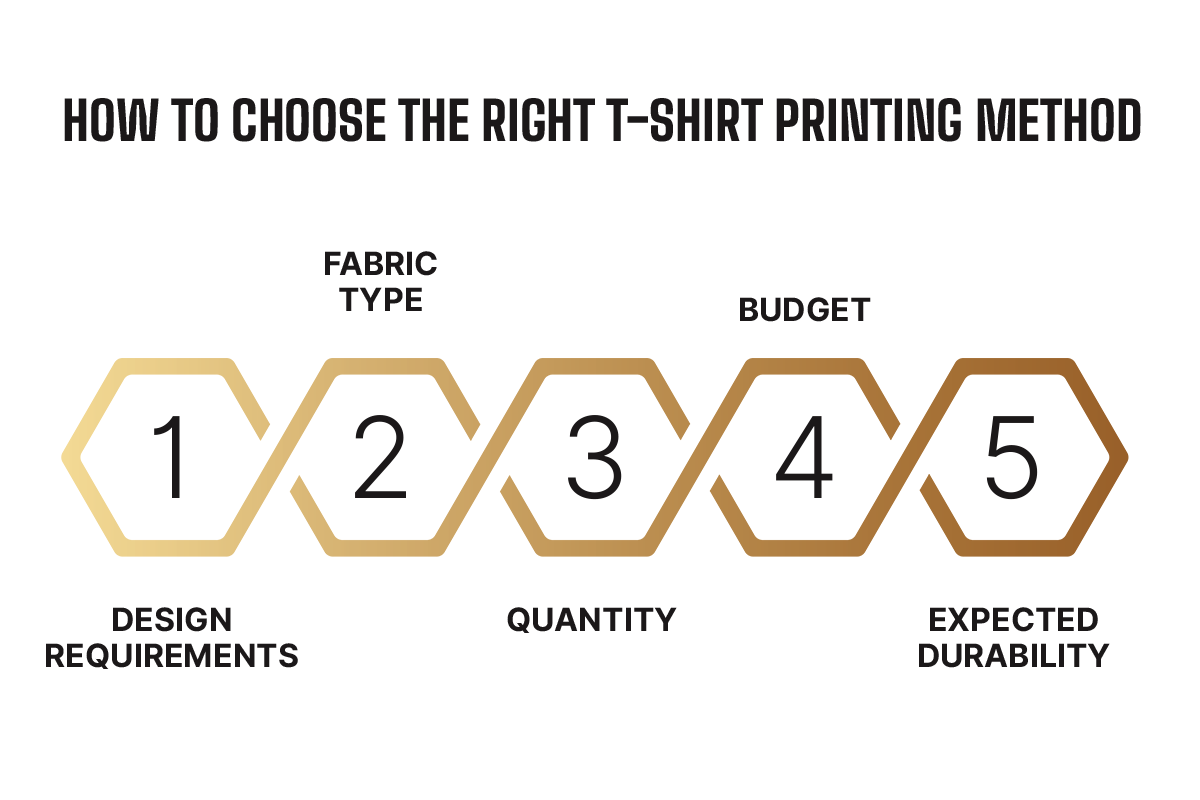
- 01
Design requirements
Is the artwork photographic, highly detailed, colourful or relatively simple? The design helps determine which method will reproduce it most effectively.
- 02
Fabric type
Check whether the garments are cotton, polyester, a blend, fleece or another material before choosing a method.
- 03
Quantity
A few shirts and a large production run have different cost considerations. Compare methods using your actual order size.
- 04
Budget
Look beyond the unit price. Include the garment, print area, number of colours and production requirements.
- 05
Expected durability
Both methods can last well when produced and cared for properly. Following garment care instructions helps preserve print quality.
If you are unsure, a printer can review your artwork and garment choice before production.
DTG vs DTF printing FAQs
Is DTF better than DTG?
Neither method is universally better. DTF is generally more versatile across fabric types, while DTG is particularly well suited to cotton garments and projects where a soft print feel is important.
Can both methods print detailed designs?
Yes. Both can reproduce detailed, full-colour artwork. The final appearance can vary with the garment, artwork, printer, inks or transfers, and production process.
Which method is better for dark shirts?
DTF can be a practical choice because the design is prepared on transfer film before application. DTG can also print on dark garments but typically requires additional pretreatment and white ink.
Which method lasts longer?
Durability depends on the materials, garment, application and care. Properly produced prints from either method can wear well when the recommended washing instructions are followed.
Is DTF suitable for business apparel?
Yes. Its broad fabric compatibility makes it suitable for many types of branded clothing, including shirts, hoodies, uniforms and promotional apparel.
Get custom T-shirts printed for your business or event.
Bring us your artwork, garment ideas, quantity and timing. Our team can help you choose a printing approach that fits your project.