What is Booklet Printing?
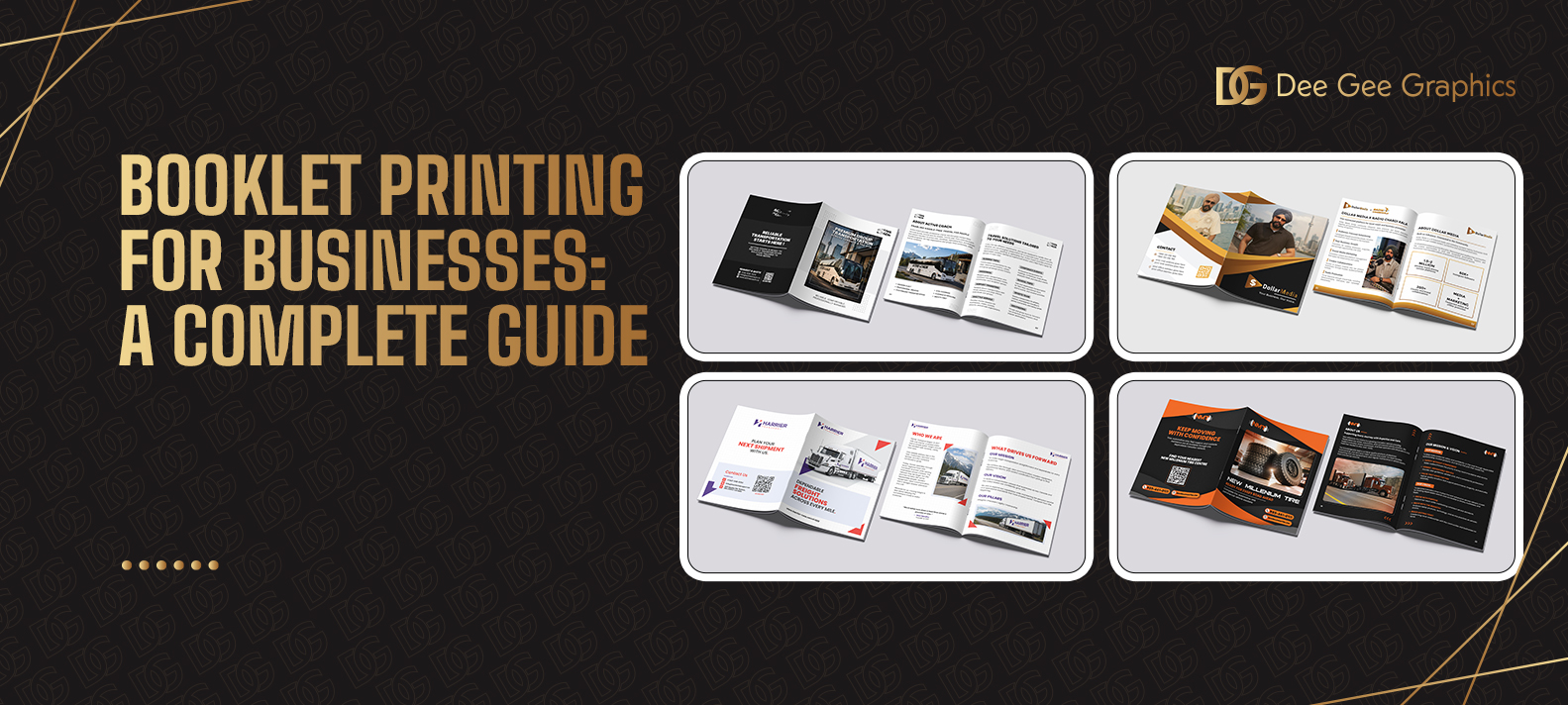
A business booklet is a multi-page printed piece used to present information in a structured, easy-to-follow format. Unlike a single-page handout, it gives a business enough space to explain products, services, processes, or company information without overcrowding the page.
Common uses include product guides, service overviews, company profiles, training materials, event programmes, sales presentations, and informational resources.
Booklets sit between brochures and catalogs in terms of depth. Brochures are often shorter and designed for quick reading, while catalogs typically focus on displaying a larger range of products. A booklet offers more room for detail while remaining compact and portable.
Why Businesses Use Printed Booklets
Printed materials continue to have a practical role in sales, marketing, and customer communication. A well-planned booklet can bring several pieces of information together in one professional format.
Product and Service Information
Businesses can use booklets to explain features, benefits, specifications, pricing, or service packages. This is particularly useful when customers need more context before making a decision.
Company Presentations
A company booklet can introduce your history, capabilities, team, values, locations, and areas of expertise. It can be useful during meetings, trade shows, consultations, and sales conversations.
Sales and Marketing Materials
Booklets can support sales teams by giving prospects a tangible reference they can review after a meeting. They can also bring campaign messaging, product information, testimonials, and calls to action into one cohesive piece.
Training and Informational Resources
Internal teams, customers, and partners can use printed booklets as guides, manuals, onboarding resources, or educational material.
Types of Booklets Businesses Can Print
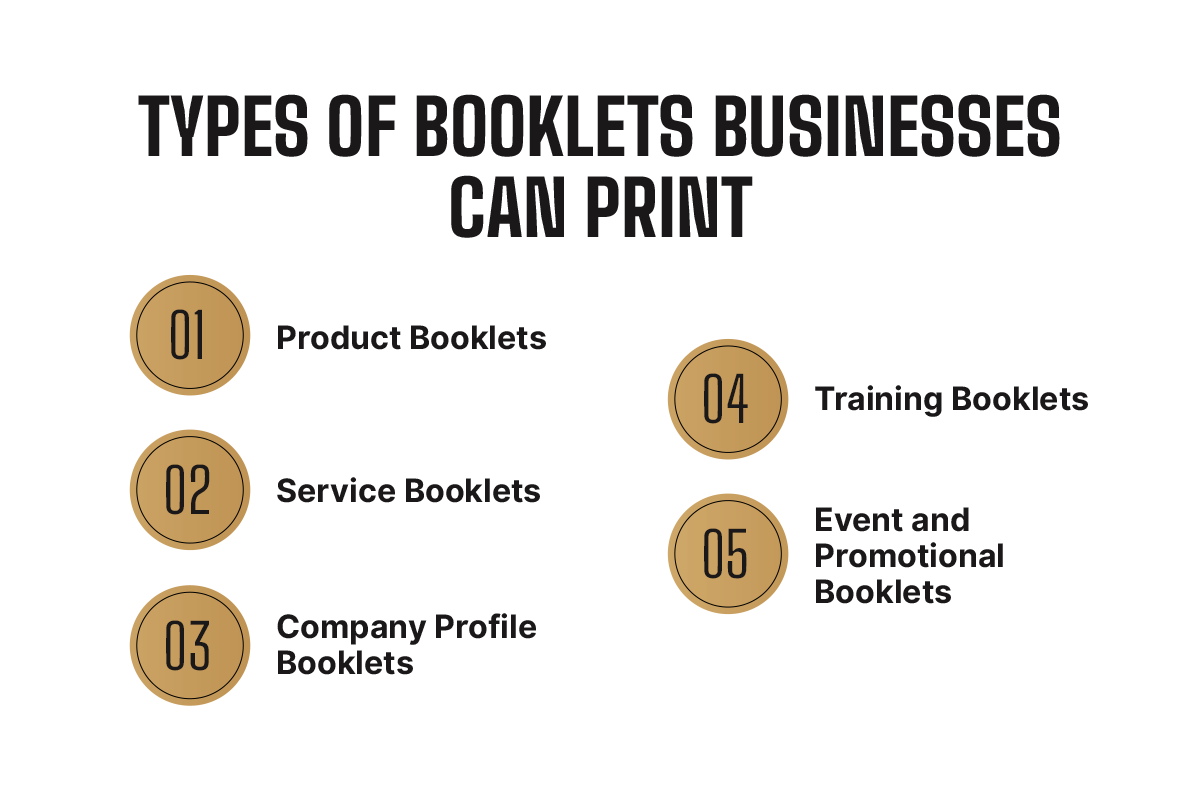
Product Booklets
Designed to explain a product range, specifications, applications, or key features in greater detail.
Service Booklets
Useful for businesses offering multiple services, allowing each offering to be explained without forcing too much information onto a single page.
Company Profile Booklets
These present an overview of a business, including its background, capabilities, values, achievements, and contact information.
Training Booklets
Training materials can be organized into chapters, instructions, checklists, illustrations, and reference sections for easier use.
Event and Promotional Booklets
These can support conferences, exhibitions, launches, community events, and promotional campaigns with schedules, speaker information, offers, or event details.
How to Choose the Right Booklet Size
The right size depends on how much information you need to present and how the finished piece will be used. Common formats include letter size, half-letter, A4, and A5, although custom dimensions are also possible.
For detailed technical or corporate information, a larger page may provide better readability. Smaller formats can be easier to carry and distribute at events or in-store.
Portrait layouts are familiar and work well for text-heavy content. Landscape formats can be useful when photography, charts, diagrams, or wide visuals are central to the design.
Choosing the Right Paper for Business Booklets
Paper affects how a booklet feels, reads, and holds up in use. Paper weight should be selected according to the purpose of the piece. A lightweight stock may suit a frequently handled informational guide, while a heavier cover can provide additional structure and durability.
Glossy paper can make photographs and colours appear vibrant, making it useful for product-focused materials. Matte paper offers a softer finish and can reduce glare, which may be preferable for text-heavy documents.
Think about where the booklet will be used, how often it will be handled, and the impression you want it to create before selecting the stock.
Booklet Binding Options
Saddle-Stitch Binding
Pages are folded and secured along the centre with staples. It is practical for shorter booklets and offers a clean, economical finish.
Perfect Binding
Individual pages are glued to a wrapped spine. This creates a more book-like appearance and works well for thicker publications.
Spiral or Coil Binding
Pages are punched and secured with a spiral or coil. It allows the booklet to open flat, making it useful for manuals, workbooks, and training materials.
The best binding depends on page count, usage, durability requirements, and presentation. A printer can help you select an option that fits both the design and function of the piece.
How to Design an Effective Business Booklet
Start with a clear structure. Group related information together and use headings, subheadings, images, and white space to make the content easy to navigate.
Keep branding consistent across every page. Your logo, colours, typography, imagery, and messaging should feel like part of the same visual system.
Choose fonts that remain readable at the finished size and use high-quality images. Avoid filling every available space; a well-balanced page is easier to read and often communicates more effectively.
For custom booklet printing, it is also important to consider how the finished format will support your content. Page size, image placement, paper selection, and binding should work together rather than being treated as separate decisions.
Finally, give the reader a next step. Whether that means visiting your website, requesting a quote, booking a consultation, or contacting your team, make the call to action clear and easy to find.
How Much Does it Cost to Print a Business Booklet?
The final price depends on several production choices. Quantity is one of the biggest factors, as larger runs can reduce the per-piece cost. Paper stock, finishing, binding, size, colour requirements, and page count also influence the total.
A simple, short booklet with standard paper and saddle stitching will generally have different production costs from a longer publication with premium stock and perfect binding.
Rather than choosing options based only on the lowest price, consider the booklet’s purpose, expected lifespan, audience, and required finish. The right specifications can help balance presentation, durability, and budget.
How to Prepare Your Booklet for Printing
Before sending a file to production, confirm that it meets the printer’s specifications. Use the correct page size, include bleed where required, and keep important text and graphics safely inside the trim area.
Images should be supplied at an appropriate resolution so they remain sharp when printed. Fonts should be handled according to the printer’s file requirements, and colours should be prepared using the requested colour mode.
Proofread every page carefully. Check names, numbers, URLs, contact information, page order, images, and calls to action. A final proof can help catch errors before the full run is produced.
Printed Booklets for Different Business Needs
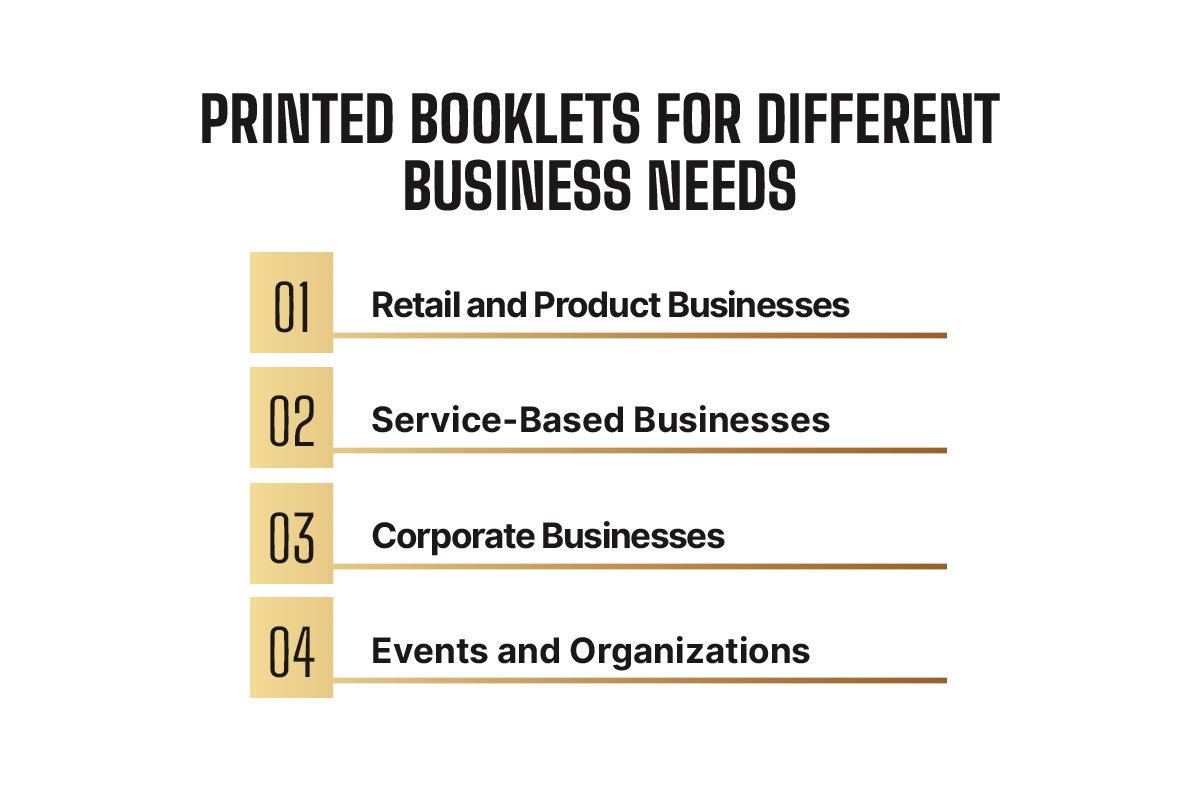
Retail and Product Businesses
Retailers can use booklets to introduce product collections, explain features, provide care information, or support in-store promotions. They can also complement other physical marketing materials, such as custom apparel and packaging.
Service-Based Businesses
Consultants, contractors, healthcare providers, agencies, and other service businesses can use booklets to explain offerings, processes, credentials, and customer benefits.
Corporate Businesses
Corporate booklets can communicate company information, capabilities, policies, training content, or information for clients and stakeholders. They can also provide a useful physical resource during meetings and business events.
Events and Organizations
Events, associations, educational institutions, and community organizations can use booklets for programmes, schedules, guides, directories, and informational resources. Business Signs can also work alongside these materials to create a consistent physical presence at an event or venue.
Why Professional Booklet Printing Matters
Professional production helps ensure that your finished booklet reflects the same level of care as the information inside it. Accurate colour reproduction, clean finishing, consistent trimming, suitable paper, and reliable binding all contribute to the final result.
A professionally produced booklet is also easier to use and more likely to support your brand image. For businesses distributing materials to customers, prospects, employees, or partners, these details can make a meaningful difference.
From product information to promotional campaigns, Custom Sticker Printing and other branded materials can also complement a well-designed booklet when businesses want to create a consistent physical brand experience.
FAQs About Business Booklets
How many pages should a business booklet have?
The ideal page count depends on the amount of information and the binding method. Start with the content rather than forcing a specific page count.
What paper is best for a business booklet?
There is no single best option. Choose based on whether the booklet is text-heavy, image-focused, frequently handled, or intended for a premium presentation.
Can booklets be customized?
Yes. Businesses can customize size, paper, cover, binding, page layout, colours, images, and finishing to suit the purpose and brand.
How do I get started?
Define the purpose, audience, content, approximate quantity, and preferred format. A professional printer can then help determine the specifications and production approach.
For businesses looking for dependable booklet printing services, the right partner can help turn your content into a polished, practical marketing or information piece. Dee Gee Graphics provides printing and branding solutions for businesses across Canada and the USA, with a focus on quality, precision, and professional execution.
Bring your business story to the page.
Tell us your booklet’s purpose, audience, quantity and preferred format. We can help you choose the paper, binding and finish for your project.